Wall Painting in West Palm Beach
Wall Painting
Wall painting is the most visible part of any interior refresh. Fresh, even walls change how a room feels and provide a clean backdrop for your furnishings. For homes and offices in West Palm Beach and the Palm Beach area, wall painting is a practical way to update a space without major renovation.
A good wall finish depends on repairing surface flaws, choosing the right primer and paint, and applying it evenly. The details below explain what goes into a typical wall painting project.
Preparing Walls for an Even Finish
Walls are cleaned to remove dust and marks, then inspected for nail holes, dents, and cracks. Damage is filled with joint compound or spackle, sanded smooth, and feathered into the surrounding surface so repairs do not show through the paint.
Glossy existing paint is lightly sanded so the new coat adheres, and loose or peeling paint is removed to a sound edge.
Repairing Surface Imperfections
Small repairs make a big difference in the final look. Dents from daily use, settling cracks, and old anchor holes are patched and blended. Where repairs are larger or the wall has water damage, the source is addressed before painting so the problem does not return.
Primer is applied over repairs and bare spots to seal the surface and prevent the patched areas from flashing through the topcoat.
Selecting the Right Finish
Wall finish is chosen by how the room is used. Living rooms and bedrooms often use eggshell or satin for a soft sheen that resists marks. High traffic areas like hallways and family rooms benefit from more washable finishes.
Kitchens and bathrooms do better with moisture resistant, washable paint, while accent walls can use deeper color in a finish that complements the rest of the room.
Achieving an Even Appearance
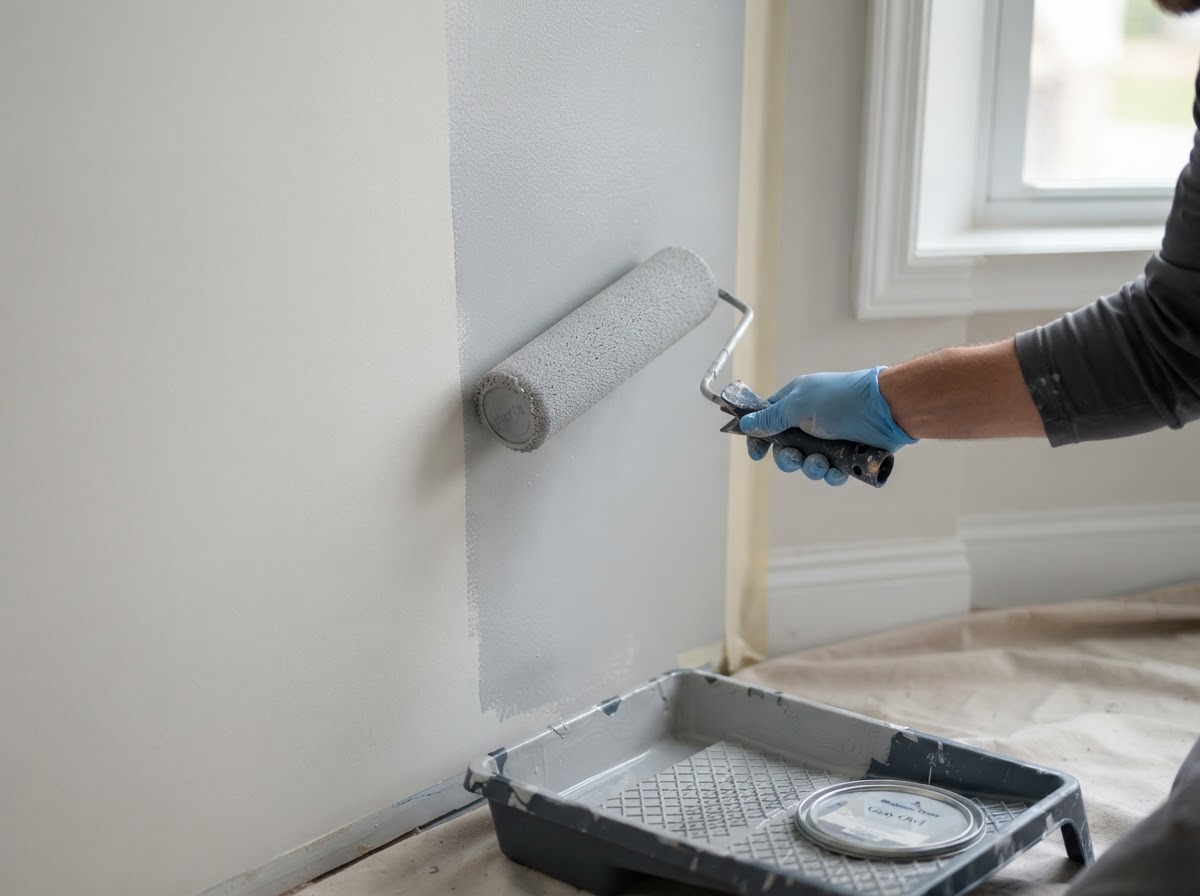
Even coverage comes from technique. Edges are cut in by hand first, then walls are rolled in sections while the cut in edge is still wet, which prevents visible bands. Using a quality roller nap for the paint and wall texture helps the coat lay down uniformly.
Two coats are often needed for full coverage, especially over repairs or when changing color, so the finished wall looks consistent in every light.
Explore Related Services
The Wall Painting Process
A typical wall painting project follows a clear, repeatable sequence that keeps the work organized.
- 1
Assess the walls
Identify holes, cracks, dents, and any moisture or peeling that needs attention.
- 2
Repair and sand
Fill imperfections, sand smooth, and feather repairs into the surface.
- 3
Prime and protect
Prime repairs and bare spots, cover floors, and mask trim and edges.
- 4
Cut in and roll
Hand cut in the edges, then roll walls in wet sections for even coverage.
- 5
Inspect and finish
Check coverage, apply a second coat if needed, and remove masking.
Common Questions About Wall Painting
How many coats of paint do walls need?
Two coats usually give full, even coverage, especially over repairs or when changing color. Some touch ups or same color refreshes may need only one.
Do you fix holes and cracks before painting?
Yes. Nail holes, dents, and cracks are filled, sanded smooth, and primed so they do not show through the finished wall.
What finish is best for high traffic walls?
More washable finishes like satin or semi gloss resist marks and clean easily, making them good for hallways, kitchens, and family rooms.
Next Steps for Your Project
Browse the full range of painting services, then visit the contact page to learn how to move your wall painting project forward in West Palm Beach.
- Review the scope and surfaces for your project
- Choose finishes suited to the space and use
- Plan timing around weather for exterior work
- Prepare the space so painting stays contained